
How Does an Electronic Dobby Work? A Complete Guide to Selection, Operation, and Maintenance
On modern shuttleless looms, the shedding mechanism is one of the core elements that determine fabric variety, quality, and production efficiency. The electronic dobby, as the most widely used shedding mechanism today, has become critical equipment for weaving small-pattern fabrics such as cotton, wool, silk, and linen, thanks to its high precision, high speed, and flexible heald control capabilities. Its practicality rests on three pillars: precise shedding principles, reliable selection control, and proper selection and maintenance practices.
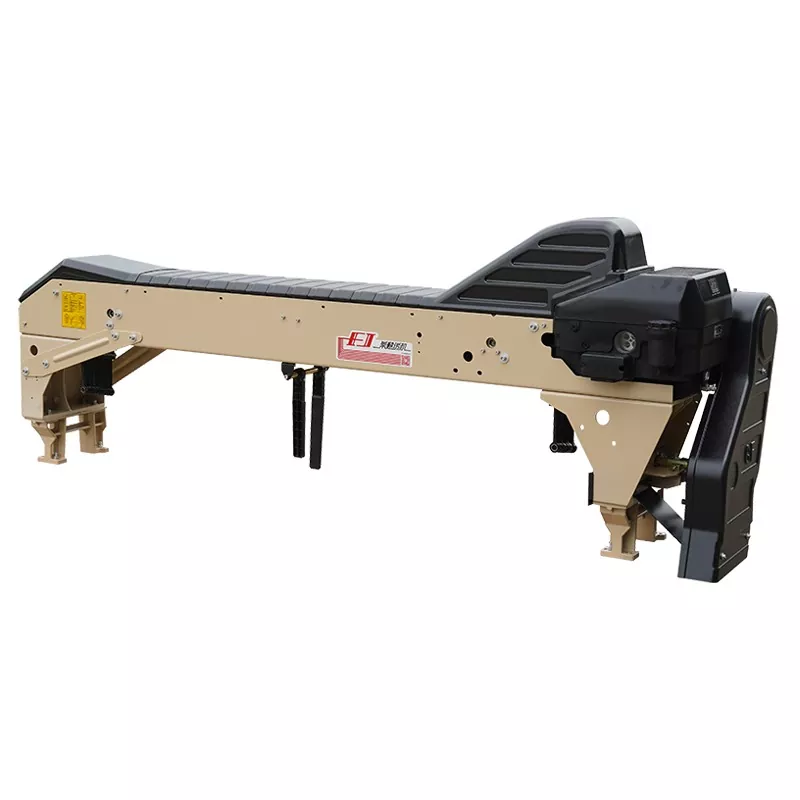
Core Operating Principles: Shedding and Selection
1. Shedding Mechanism
The shedding mechanism converts rotary motion into the lifting and lowering movement of the heald frames. It determines the smoothness of heald frame motion and the upper speed limit of the dobby.
Taking the Stäubli 2650 electronic dobby as an example, its shedding mechanism employs a combination of conjugate cams and linkage rods. Power is transmitted from the main shaft through a large disc to an eccentric shaft, which rotates at constant speed. The motion then passes through conjugate cams, swing arms, and slide channels to ultimately drive the shedding arms, causing the heald frames to perform the shedding motion. The use of conjugate cams effectively reduces impact, improves force distribution, and enables higher operating speeds.
Another common shedding method is the differential variable-speed rotary mechanism. By combining a fixed cam with a swinging frame, the output shaft achieves varying angular velocity during one full rotation, controlling the heald frame positions at different moments of the weaving cycle.
2. Selection Control Mechanism
The selection mechanism determines which heald frames are lifted and which remain stationary for each pick. This is where electronic dobbies achieve pattern digitization.
Electronic dobbies typically use electromagnets as signal conversion elements. The fabric pattern information is processed by a computer and output in real time as electrical signals to the electromagnet coils. The electromagnetic force actuates an armature, which in turn controls the clutching or selection elements within the shedding mechanism, ultimately deciding whether each heald frame participates in the current shedding action.
In a typical pawl-clutch type selection mechanism, the driving disc rotates continuously. The driven disc engages or disengages via pawls to control whether the eccentric rotates through 180°, thereby determining whether a heald frame executes a shedding movement. The ON/OFF signals from the electromagnets precisely control the positions of push rods, which in turn control the pawls, completing the closed loop from signal to electromagnetic force to mechanical action.
Key Technical Features and Advantages
1. High Speed and Reliability
Modern electronic dobbies can achieve operating speeds of over 650 rpm. Rugged single-box construction, oil-bath lubrication systems, and high-precision bearings ensure stability and service life under high-speed operation.
2. Pattern Storage and Change Flexibility
The greatest advantage of electronic dobbies lies in digital pattern management. Unlike mechanical dobbies that require pattern cards to be physically replaced or modified, electronic dobbies allow pattern changes by simply modifying data via software. They support pattern lengths of over 100,000 picks, with no mechanical restrictions on pattern length.
3. Maintenance-Free or Reduced-Maintenance Design
New-generation electronic dobbies incorporate maintenance-free bearings and shedding mechanism designs, reducing routine maintenance workloads and downtime. Bearing designs have eliminated the need for regular lubrication, significantly reducing oil and grease consumption.
4. Automatic Lubrication Systems
Some electronic dobbies are equipped with automatic lubrication functions. By incorporating oil inlet and outlet channels within key drive shafts, an oil pump delivers lubricant to all bearings and friction pairs, ensuring effective lubrication while extending equipment life.
How to Select an Electronic Dobby
1. Number of Heald Frames
Electronic dobbies typically come with 16 or 20 heald frames. The choice depends on fabric pattern complexity. Small-pattern fabrics such as shirting and bed linens generally require 16 frames, while more complex weaves may need 20 or more.
2. Loom Type Matching
The electronic dobby must match the primary loom type:
| Loom Type | Characteristics |
|---|---|
| Air-jet loom | High-speed, suitable for cotton and synthetics |
| Water-jet loom | Suitable for hydrophobic fibers (polyester, nylon) |
| Rapier loom | Suitable for wool, silk, and specialty fibers |
| Projectile loom | Suitable for wide-width heavy fabrics |
Dobby mounting configurations come in under-mounted and top-mounted versions, selected based on loom structure and operator preferences.
3. Mounting and Spatial Requirements
The installation height and drive method of the electronic dobby must match the loom. Top-mounted dobbies typically require higher ceiling clearance but offer easier access for operation and maintenance.
4. Shedding Mechanism Type
Different dobby models feature different shedding mechanisms, which determine heald frame connection methods and quick-change capabilities. Quick-connect systems enable rapid heald frame changes—a practical feature for mills that frequently switch pattern types.
5. Lubrication Method
Oil-bath lubrication: Simple construction, low maintenance cost
Forced circulation lubrication with filtration: Superior lubrication for continuous high-speed operation
Operation and Maintenance Essentials
1. Power-Off Procedure
Always turn off power when the main shaft is at approximately 300°. If power is cut at other angles, pattern data may become corrupted, causing incorrect heald lift sequences on the next startup.
2. Prohibited Reverse Rotation Ranges
Electronic dobbies prohibit reverse rotation within specific main shaft angle ranges:
Forward-to-reverse prohibited range: 90° to 210°
Reverse-to-forward prohibited range: 30° to 150°
Forcing reverse rotation within these ranges will corrupt the pattern. If reverse rotation is required, first jog the main shaft forward out of the prohibited range before reversing.
3. Pattern Corruption Recovery
If pattern corruption occurs due to forced reverse rotation within prohibited ranges, run the loom continuously in one direction for at least two full turns. This usually restores the correct heald lift sequence. If the pattern remains corrupted, manually reset the heald frame positions using the controller's manual mode.
4. Electromagnet Status Inspection
Electromagnets are among the most failure-prone components in electronic dobbies. The controller's diagnostic interface can check for broken electromagnet circuits—faulty electromagnets are typically displayed in red for their corresponding heald frames. Regular inspection and timely replacement of failed electromagnets are critical measures for ensuring reliable operation.
5. Automatic Leveling Function
Some electronic dobbies feature an automatic leveling function. When the loom stops due to warp breakage, weft breakage, or other reasons, this function automatically performs a leveling operation, returning all heald frames to the level position. This allows the operator to handle the break and restart the loom more efficiently, while also effectively preventing stop marks and other weaving defects.
Common Faults and Troubleshooting
| Symptom | Likely Cause | Corrective Action |
|---|---|---|
| Pattern corruption | Reverse rotation within prohibited range; incorrect power-off angle | Run two full turns to recover; check power-off angle settings |
| One heald frame does not operate | Corresponding electromagnet open circuit; drive circuit failure | Check electromagnet status via diagnostic interface; replace faulty electromagnet |
| Loom cannot be jogged in reverse | Current angle in prohibited reverse range | Jog forward out of prohibited range, then reverse |
| Signal anomaly alarm | Electromagnet pick-up/release signal abnormal | Check electromagnet supply voltage; check controller output signals |
| Unstable heald frame motion | Bearing wear in shedding mechanism; poor lubrication | Check automatic lubrication system; replace worn bearings |
Typical Application Scenarios
| Application Field | Recommended Configuration | Key Requirement |
|---|---|---|
| Cotton shirting fabrics | 16 heald frames, air-jet loom | High-speed operation |
| Worsted wool fabrics | 16-20 heald frames, rapier loom | Smooth shedding, suitable for heavier yarns |
| Synthetic silk-like fabrics | 16 heald frames, water-jet loom | Corrosion-resistant design |
| Home textile bed linens | 16-20 heald frames, rapier or air-jet loom | Large pattern storage capacity |
| Terry towel fabrics | 16 heald frames, rapier loom | High shedding load capacity |
Installation and Commissioning Precautions
1. Angle Reference Alignment
During installation, the dobby's angle reference must be precisely aligned with the loom's main shaft angle. Any deviation will cause incorrect shedding timing relative to weft insertion.
2. Drive Coupling
Whether using direct drive or belt drive, ensure proper tension and alignment. Incorrect coupling leads to uneven shedding and premature wear of both the dobby and loom components.
3. Initial Pattern Verification
After installation and before production runs, verify the pattern by running the loom in slow speed for a full pattern cycle. Check that each heald frame follows the correct sequence and that shedding heights are uniform across the full width.
The practicality of the electronic dobby lies in its ability to merge the reliability of mechanical dobby mechanisms with the flexibility of digital control, transforming small-pattern fabric weaving from a labor-intensive process into a precision-driven operation. When selecting, evaluate loom type, pattern complexity, and the need for features such as automatic leveling or quick-change systems. During installation, ensure angle reference and drive coupling are accurately set. In operation, strictly observe prohibited reverse ranges and correct power-off angles. A properly commissioned electronic dobby will reliably produce complex fabric patterns for years, making it one of the most trusted partners in any modern weaving mill.